
There are no items in your cart
Add More
Add More
| Item Details | Price | ||
|---|---|---|---|

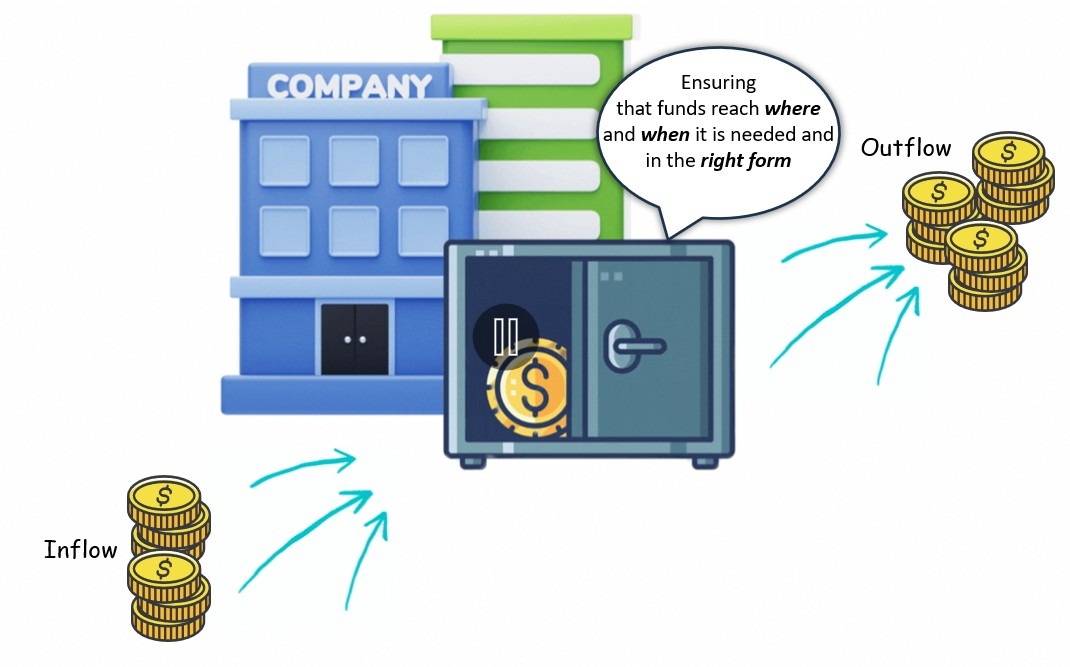
The word ‘treasury’ comes from the word ‘treasure’ and thus, in simple words, it means the place where all the treasures are stored. In the context of any business, big or small, the treasury is the place which controls and manages the money related to the business.
In a small business, there will be regular inflow of money as well as regular outflows, sometimes resulting in a positive money balance and sometimes negative. Handling this cyclical day to day process and ensuring that funds reach where and when it is needed and in the right form to keep the business running properly is the basic purpose of treasury.
It may appear very simple apparently, all you have to do is - collect money that is receivable from customers, pay money that is due to suppliers, save and invest the rest, isn’t it? But of course, it is not as simple as it sounds.
Imagine a big corporate company, which has its offices on multiple countries across the world, dealing with multiple currencies, multiple time zones, a variety of suppliers, a wide variety of products, and a varied customer base. The funds receivable to the company are in several different currencies, from several different customer bases each with separate paying pattern, each paid in different time zones. Similarly, funds payable by the company is to different suppliers with different needs, in varied currencies, meeting varied repayment timelines.
Also, all these receiving and paying of money is done through various banking relationships, which needs to be maintained, accounts monitored and bank loans serviced.
To meet all the needs and obligations, the company needs to invest excess money wisely to get returns too and in doing all of these, also manage risks associated with these tasks.
Thus, for a global corporation, treasury is like the heart, making sure funds are present at the right place, at the right time and for the right amount - not less, not more. Having said that, treasury is not usually a profit center for a global corporate but a risk and liquidity manager.
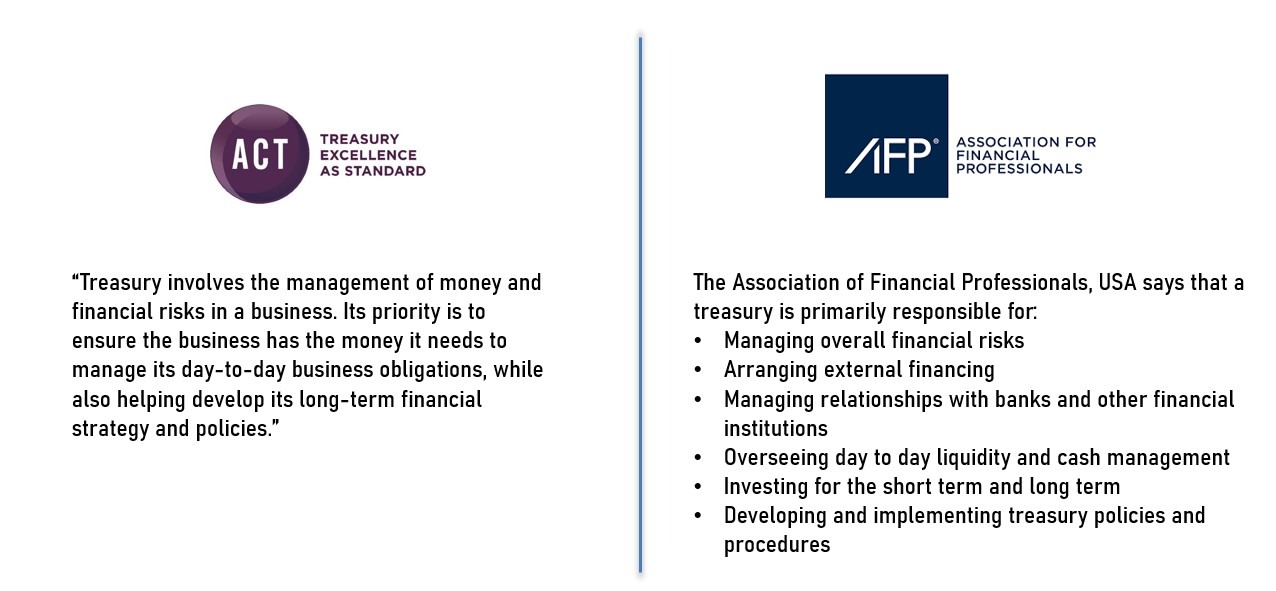
The Association of Corporate Treasurers, UK says “Treasury involves the management of money and financial risks in a business. Its priority is to ensure the business has the money it needs to manage its day-to-day business obligations, while also helping develop its long-term financial strategy and policies.”
The Association of Financial Professionals, USA says that a treasury is primarily responsible for:
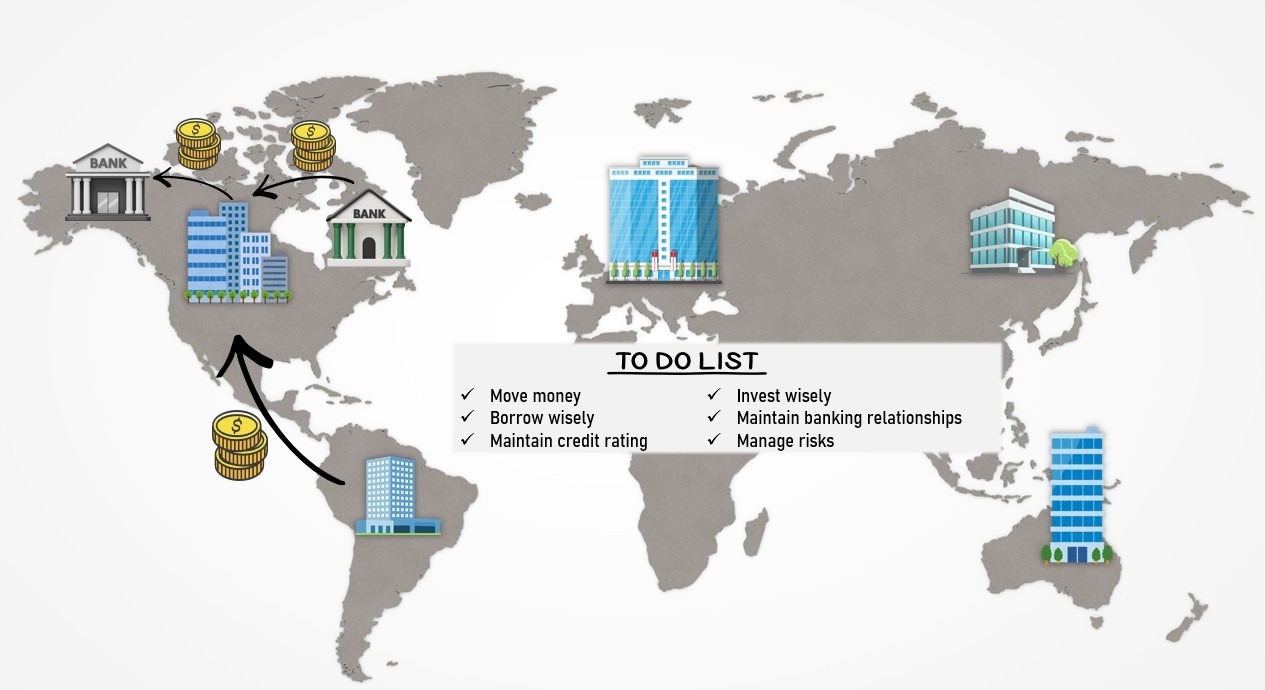
A global corporate has its offices and subsidiaries scattered in various parts of the world. Suppose in country A, to manufacture a product, the company office is buying raw materials from the suppliers of that country, then manufacturing the finished product and then selling it to the customers of that country.
Assuming that the suppliers need to be paid before the proceeds of sale come from the customers, this process needs to be funded first. The treasury will try that the suppliers get paid from the company’s own money, if the office in country A does not have the required fund but the office in country B has surplus funds, then treasury will move the money from country B to country A to make the payment.
If payment is not possible from own money, then the company must borrow from banks. Borrowings can be short term or long term and to get competitive borrowing rates the company must maintain good credit ratings.
Also, any excess money must be invested wisely so that the return can fund the running of the company in the long term. All these collections of payments, disbursal of payments, loans and borrowing, investments need banks and financial institutions, relationships with which must be maintained properly for the smooth flow of funds.
Also, all these financial transactions come with inherent risks which needs to be monitored and addressed.
This is, in a nutshell, what a global corporate treasury does.
WANT TO READ MORE?
Already signed up/ logged in? Then you are all set!
Basics of Payments | SWIFT MT/ MX Payment Message Types with examples | SWIFT GPI

Trade Finance Overview | Letter of Credit | Bank Guarantees and Standby | Incoterms® 2020

The Ultimate No-Nonsense Guide to SWIFT MT and ISO 20022 MX Message Types
 Launch your Graphy